In conclusion, a unimodal distribution is a frequency distribution with only one peak, while a bimodal distribution has two peaks. Examples of unimodal distributions include the normal, Poisson, exponential, lognormal, and sampling distributions for test statistics.
We examined various unimodal distribution examples, from the symmetrical normal distribution to the skewed exponential and Poisson distributions. We explored how to identify unimodal distributions using tools like unimodal distribution histograms and density plots.
Real-World Examples of UnimodalDataUnimodal distributions frequently manifest when measuring natural phenomena or attributes where extreme values are rare and observations tend to gravitate toward an average.
Examples of Unimodal Probability Distributions Common examples of unimodal probability distributions include the normal distribution, the exponential distribution, and the triangular distribution.
Unlike the mean (average) or median (middle value), the mode can be applied to both numerical and categorical data, making it a versatile measure of central tendency. A data set can have one mode (unimodal), two modes (bimodal), or multiple modes (multimodal).
These examples highlight how unimodal distributions help illustrate patterns in diverse fields, from education to ecology and economics. Understanding the importance of unimodal distribution in data analysis is crucial for interpreting datasets effectively.
 This tutorial explains unimodal distributions in statistics, including a formal definition and several examples.
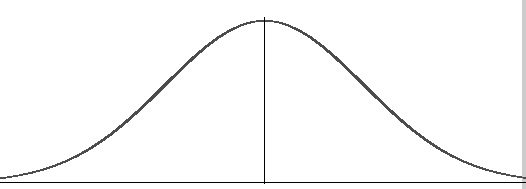 Types of unimodal distribution, definitions and examples. Mean, mode and median in unimodal distributions.